
How Small Businesses Can Benefit from Nepal Budget 2026 (Guide)
Most businesses read the Nepal Budget 2026 and move on. Smart ones turn it into an advantage. Here’s a practical, step-by-step guide to help small businesses take action, reduce risk, and grow faster.

Renuka Tamang
May 1, 2026
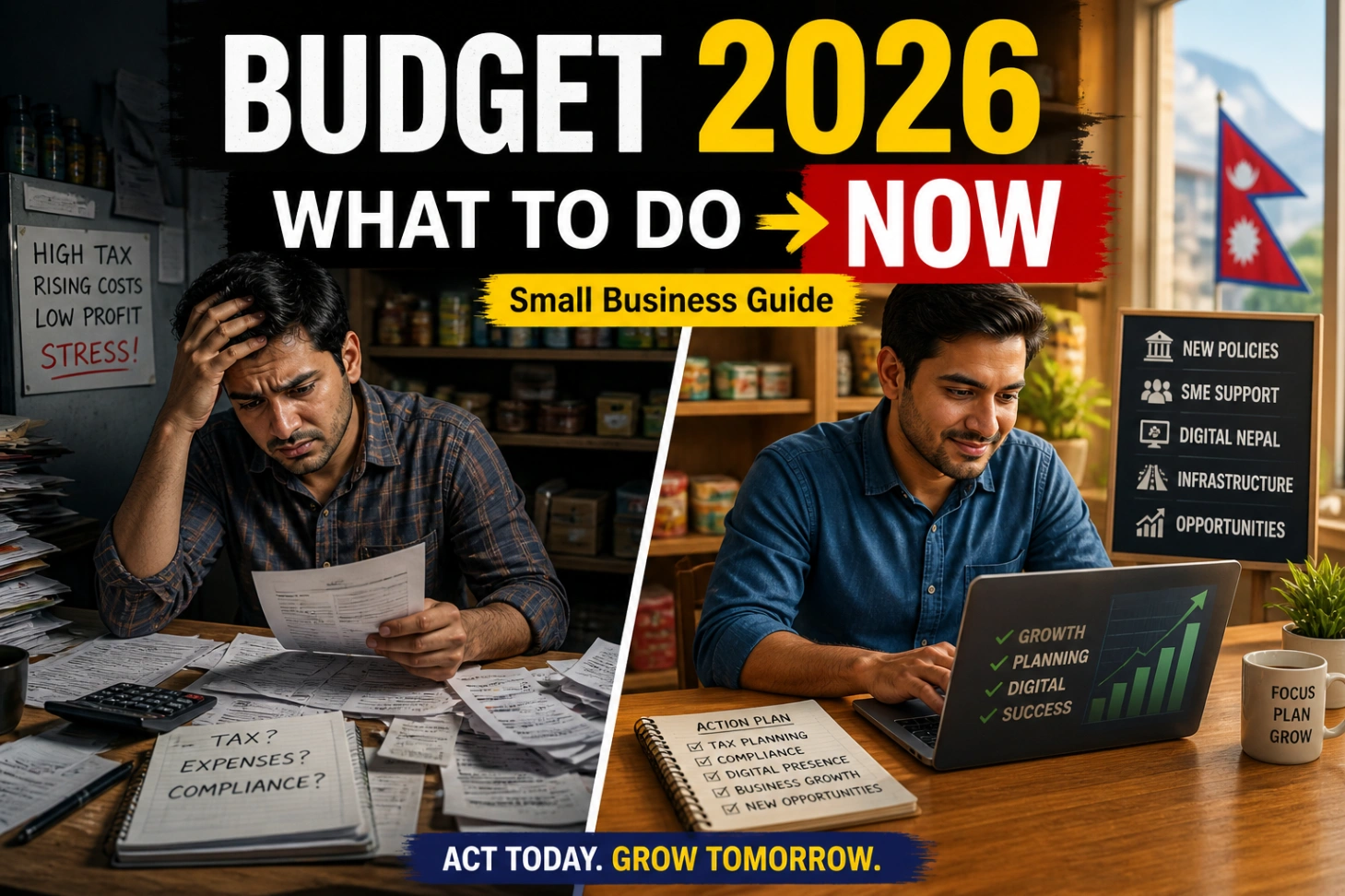
Introduction: Reading the Budget Is Not Enough
You’ve seen the headlines—tax updates, business support, digital economy push.
But here’s the real question: what should you actually do next?
Most small businesses in Nepal read the budget… and then do nothing. That’s where they lose.
If you haven’t yet, start with our full breakdown of the budget here: 👉 Nepal Budget 2026: Key Impacts for Small Business Growth
This guide goes one step further—turning policy into practical actions you can take immediately.
Quick Recap: What Changed in Nepal Budget 2026
Before we act, here’s a quick snapshot:
- Signals of tax adjustments and compliance tightening
- Continued focus on SMEs and private sector growth
- Strong push toward digital systems and transparency
- Infrastructure investment (though execution remains a challenge)
Now let’s move to what actually matters 👇
What Actually Changed (With Real Numbers)
While full implementation details may vary, here are the types of changes small businesses should pay attention to:
- Income Tax Adjustments – Changes in brackets and thresholds affecting small व्यवसाय owners
- VAT Threshold Signals – Continued focus on bringing more businesses into VAT systems
- Digital Compliance Push – Expansion of electronic billing and tracking systems
- SME Financing – Continued access to concessional loans through banks and government programs
For exact figures and official updates, refer to the Government of Nepal’s budget release via the Ministry of Finance: 👉 Ministry of Finance, Nepal
What Small Businesses Should Do Now (Step-by-Step)
1. Review Your Tax Position Immediately
If there’s one thing you shouldn’t delay—it’s this.
Even small changes in tax rules can affect:
- Your pricing
- Your profit margins
- Your cash flow
What to do:
- Recalculate your expected yearly tax
- Check if your business falls into new thresholds
- Adjust pricing if margins shrink
Ignoring this now usually leads to stress later—especially during filing season.
2. Prepare for Compliance Before It’s Forced
Nepal is slowly but clearly moving toward stricter financial tracking and transparency. Waiting until it becomes mandatory is risky.
What to do:
- Organize your income and expense records
- Start using basic accounting or billing systems
- Keep digital copies of transactions
Businesses that adapt early face fewer penalties and operate more smoothly.
3. Take Advantage of Business Incentives (Early)
Budgets often introduce support—but most small businesses don’t use it. Why? Late awareness.
What to do:
- Visit your local bank or municipality
- Ask about SME loans, subsidies, or sector programs
- Apply early before demand increases
Even a small financial advantage can significantly improve your growth.
4. Invest in Digital Presence (This Is Critical)
The direction is clear:
- Government → digital systems
- Customers → online-first behavior
But here’s the reality: you don’t need to start big.
Start simple:
- Create a Facebook page
- Set up your Google Business Profile
- Add your location, phone number, and services
This alone can increase visibility significantly.
Then level up:
- Create a dedicated website
- Showcase services professionally
- Enable direct inquiries
If you want a faster way to do this without technical complexity, platforms like 👉 HamroLink allow small businesses to launch a website in minutes.
The goal isn’t tools—it’s being discoverable where your customers are.
5. Watch Infrastructure Trends (Think Long-Term)
Budgets often highlight where growth will happen—even if slowly. Smart businesses position themselves early.
What to do:
- Track areas with planned development (roads, tourism, trade routes)
- Consider future expansion or relocation
- Adjust supply chains if needed
Those who move early benefit the most when development catches up.
When Should You Take Action?
- Immediately (0–30 days): Review tax impact and pricing
- Short term (1–2 months): Organize compliance and records
- Mid term (2–3 months): Apply for incentives or financing
- Ongoing: Build and improve your digital presence
Businesses that act within the first 60 days gain the most advantage.
Biggest Mistakes Small Businesses Make After Budget Announcements
Let’s be direct—these mistakes are common:
- Waiting to “see what happens” before acting
- Ignoring tax changes until penalties hit
- Not adjusting pricing despite cost changes
- Staying offline while competitors go digital
The pattern is simple: delay = disadvantage
Mini Case Example
A small electronics shop in Dharan could use this budget effectively by:
- Adjusting product pricing after reviewing tax impact
- Organizing sales records for better compliance
- Creating a simple website to showcase products
- Allowing customers to contact them online
Result:
- Better financial clarity
- Increased visibility
- More customer inquiries
No massive investment—just smarter action.
Conclusion: The Budget Is a Signal—Not a Solution
The Nepal Budget 2026 doesn’t automatically improve your business. It signals where things are heading.
The businesses that act early will benefit. The rest will react late—and struggle to catch up.
Start small. Act fast. Stay consistent.
And if you haven’t already, go back and read the full breakdown here: 👉 Nepal Budget 2026: Key Impacts for Small Business Growth
Enjoyed this article?
Subscribe to get the latest posts delivered straight to your inbox.