Why Most Nepali MSMEs Still Don't Have a Website in 2026?
Only 15% of Nepal’s 900,000+ MSMEs have a website in 2026. Explore why social media isn’t enough and how tools like HamroLink are closing the digital gap.

Renuka Tamang
July 29, 2026
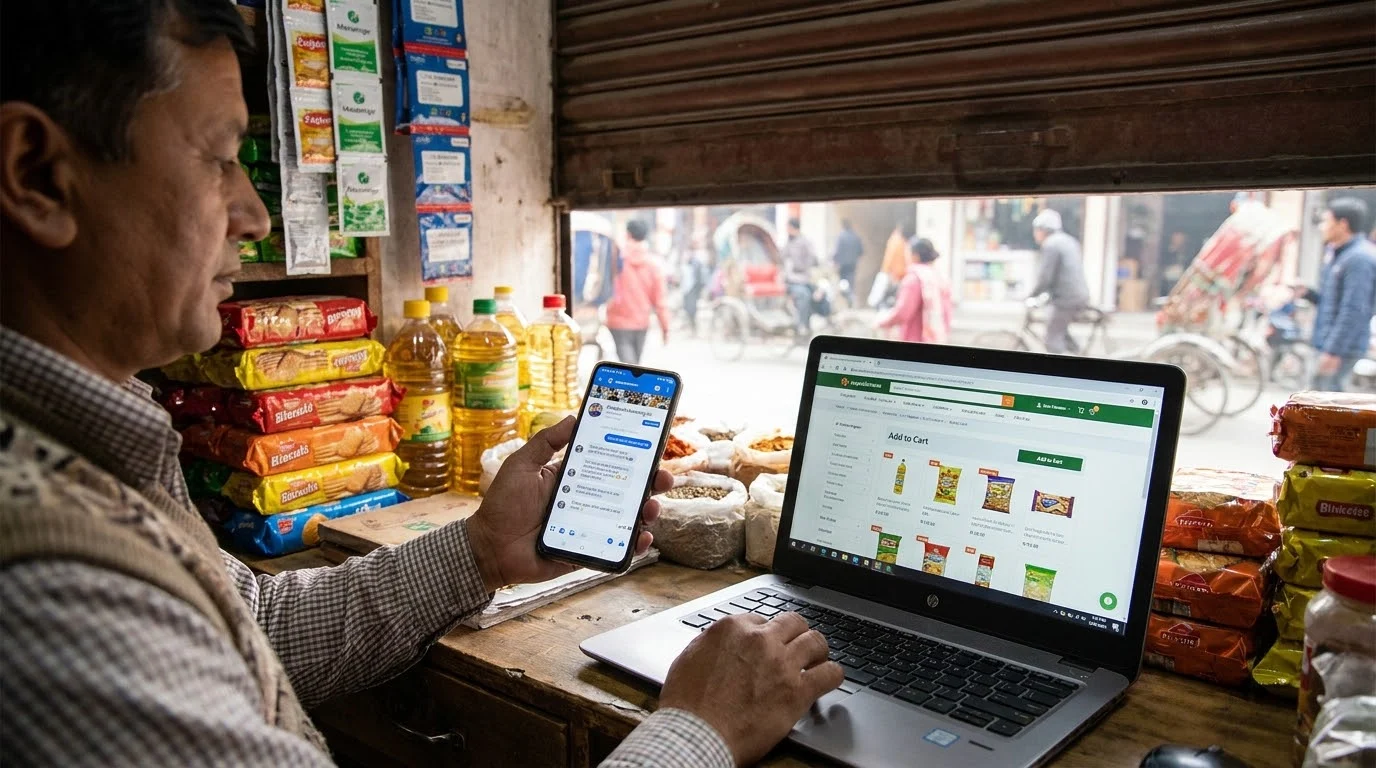
Walk through any busy market in Kathmandu, Pokhara, or Butwal and you’ll see it: small shops with Instagram handles painted on their shutters, restaurant specials posted as Facebook Stories, and DMs pinging nonstop for orders. From the outside, Nepal’s micro, small, and medium enterprises look fully digital. But ask how many of those businesses actually own a website — a domain name, a self-hosted catalog, a checkout flow they control — and the picture looks different.
Nepal now has more than 20 million internet users, smartphone penetration that climbs every year, and mobile data prices low enough to make streaming routine. Those numbers get cited regularly as proof that “Digital Nepal” is real. Yet when you look at business infrastructure instead of consumer habits, a different story emerges: most of those internet users are scrolling and messaging on rented platforms, and so are the businesses they buy from.
So how many Nepali MSMEs actually operate a dedicated website in 2026? The real figure is lower than most people in the startup ecosystem assume.
What the numbers actually look like
Nepal’s Department of Industry registers well over 900,000 active MSMEs, covering everything from corner kirana shops to mid-sized manufacturers. Getting exact website-adoption data from government sources is messy — no single ministry tracks it — but patterns emerge from domain registrars, hosting providers, and digital agencies working with small businesses across the country.
What they report is this: an estimated 60–70% of urban businesses maintain at least an intermittent social media presence. Facebook and Instagram dominate, with WhatsApp used as the de facto sales channel. But when you ask about a standalone business website, the figure drops dramatically. Most agencies estimate that fewer than 15% of registered MSMEs have a functioning, updated domain they control. In some sectors, like local manufacturing and agro-processing, that share is even lower.
This isn’t a “digital literacy” problem in the way it’s usually framed. Business owners can livestream a product launch, edit Reels, and manage a dozen DMs simultaneously. The gap exists because of three very practical pressures:
- Cost perception: Custom website builds routinely quote in the lakhs, putting them out of reach for businesses operating on thin monthly margins. Even cheaper template builders feel expensive once you add hosting, maintenance, and recurring subscription fees.
- Capacity to maintain: A website isn’t a one-time project. It needs security updates, content refreshes, and occasional redesigns. Most MSME owners don’t have a dedicated IT person, and hiring an agency retainer burns cash fast.
- Psychological safety of rented land: Facebook pages don’t break after a plugin update. They don’t get hacked unless the platform itself gets hacked. For a business owner who’s juggling inventory, payroll, and family demands, the platform that “just works” feels like the safer bet — right up until it isn’t.
Rented land feels safe until the rules change
The problem with a social-media-only strategy isn’t that Facebook and Instagram are disappearing tomorrow. It’s that you don’t own the shelf, the pricing of the shelf, or the relationship with the customer who found you there.
Algorithm shifts can drop your reach by half in a week. A regulatory enforcement — say, a broader rollout of compliance requirements under Nepal’s E-Commerce Act — could suspend a seller’s account without warning, freezing orders and customer data on a platform you don’t control. Even something as routine as a disputed payment or a hacked profile can wipe out years of buyer reviews and history overnight.
For Nepali MSMEs, the risk compounds quickly. When your entire digital existence is a Facebook page and a WhatsApp number, there’s no fallback. No email list, no search presence, no domain that customers can type directly. Building that infrastructure takes time, and the most painful time to start is after the platform pulls the rug.
This dependence on borrowed channels is one of the structural reasons so many small businesses hit a ceiling, even with strong local demand. I’ve explored that ceiling in more depth in a previous piece on why Nepali startups struggle to scale — the infrastructure gaps, the working-capital crunches, and the lack of operational resilience that keep promising ventures trapped at a certain size.
What changes by 2030 for businesses that stay social-only
Customer expectations are moving faster than the regulatory landscape, and they’re already starting to split into two tiers. The buyer who’s comfortable with DM-based haggling and bank-slip confirmations isn’t going anywhere — that’s a huge chunk of the market. But a second, faster-growing group of customers now expects a domain name they can verify, a product page with clear pricing, and a checkout process that doesn’t involve three screenshots on Viber.
As Nepal’s digital payment rails mature, government portals begin requiring structured business data, and younger consumers default to searching on Google rather than scrolling through Facebook feeds, a business that exists only on social media will start to look less like a savvy lean operation and more like an untraceable stall in a digital alley.
This isn’t a forecast about everyone suddenly needing a 20-page custom site. It’s about a basic shift in credibility signals. A verified domain and a clean landing page will increasingly serve the same function that a laminated price list and a GST registration once did: proof that you’re a real business, not a fly-by-night seller.
I laid out a longer view of these structural shifts in How Nepal’s business landscape will change by 2030. The central thread there is that businesses that voluntarily build independent digital assets before they’re forced to will have a two-to-three-year lead on competitors who wait for regulation or customer pressure to push them.
Bridging the gap without a custom build
Telling a neighborhood retailer, an educational consultancy, or a school to commission a custom web application from a software shop isn’t practical. The cost is high, timelines stretch, and maintenance requires ongoing technical help. But staying on rented social land also comes with hard limits.
HamroLink takes a different approach. Instead of a simple link-in-bio page or a static brochure site, it bundles a business website with the operational tools an MSME actually uses day-to-day. You get a product catalog with customer reviews, a built-in CRM that logs every interaction and purchase history, and the ability to send targeted email campaigns — whether you’re a retailer driving repeat orders, an educational consultancy tracking student leads, or a school sending fee notices. The platform handles the technical side so the owner can focus on sales, not server updates.
The result is that a business gets more than just a domain. It gets a system that captures leads, organizes customer data, and processes orders — without requiring a developer or a large upfront budget. For the 85% of MSMEs still offline, that shift in what a “website” can mean changes whether getting one actually happens.
None of this data is locked in a vault. The numbers here come from cross-checking informal surveys by local tech groups, conversations with registrars and hosting companies in Kathmandu, and patterns visible to anyone who’s tried to find a Nepali MSME’s website from outside their social media bubble. If you’re a researcher, a journalist, or a startup founder working on Nepal’s digital economy, use these figures, build on them, and cite them. The more this gap gets quantified openly, the harder it becomes for policy and funding discussions to ignore the businesses that are still invisible online.
Owning a piece of your digital footprint isn’t a luxury add-on anymore. In 2026, it’s the difference between a business that survives a platform change and one that disappears when the algorithm does.
Enjoyed this article?
Subscribe to get the latest posts delivered straight to your inbox.